Beyond the Game
Champlain College x MRSV*SPACE | Summer 2026
An eight-week collaboration exploring how game-development skills can translate into the emerging field of spatial experience design.
The
Challenge.
Game development has created one of the most sophisticated creative pipelines in digital media.
Students entering game programs learn how to build worlds through 3D modeling, environment design, Unreal Engine, storytelling, programming, sound, technical art, and multidisciplinary production.
But the industry they are preparing to enter is changing.
Studio closures, layoffs, and greater competition for entry-level positions are creating uncertainty around the traditional path from game school to game studio.
At the same time, many of the technologies and skills developed by the gaming industry are expanding into new territory.
Real-time 3D is increasingly being used across immersive entertainment, cultural experiences, education, simulation, retail, events, and interactive physical environments.
For schools, this creates an important question:
What if a game-development education could lead somewhere beyond the game industry?
The opportunity isn't to move students away from gaming. It's to expand where those skills can take them.
What it is now
3D Design

Unreal Engine
Game
What it can be
3D Design
Unreal Engine
Spatial Experience
The
Opportunity.
During the summer of 2026, students from Champlain College joined the MRSV*SPACE team in Osaka for an eight-week internship.
Together, we tested a simple idea:
Could students use the same skills and production methods they were already learning for games to create an immersive experience for a physical space?
Their project became Underwater Cathedral.The team imagined the ruins of a monumental cathedral transformed over time into a living underwater ecosystem.
The workflow was familiar. The destination was not.
Instead of designing only for a player looking through a screen, the students had to consider what happens when the digital environment surrounds the person experiencing it.
The physical room became part of the composition.
From building a world to
designing an experience.
Over eight weeks, the students moved from concept development to a completed real-time environment, culminating in presentations to invited industry guests and Champlain College leadership.
Using 3D design software, Unreal Engine, and MRSV*SPACE, the students combined:
The
Takeaway.
Underwater Cathedral was the project. The more important result was what the project demonstrated.
The next generation of spatial experiences does not need to be built from an entirely new talent pool.
Game programs are already educating many of the environment artists, Unreal developers, technical artists, storytellers, sound designers, and producers that this emerging industry will need.
The creative and technical pipeline already exists.
What changes is where it leads.
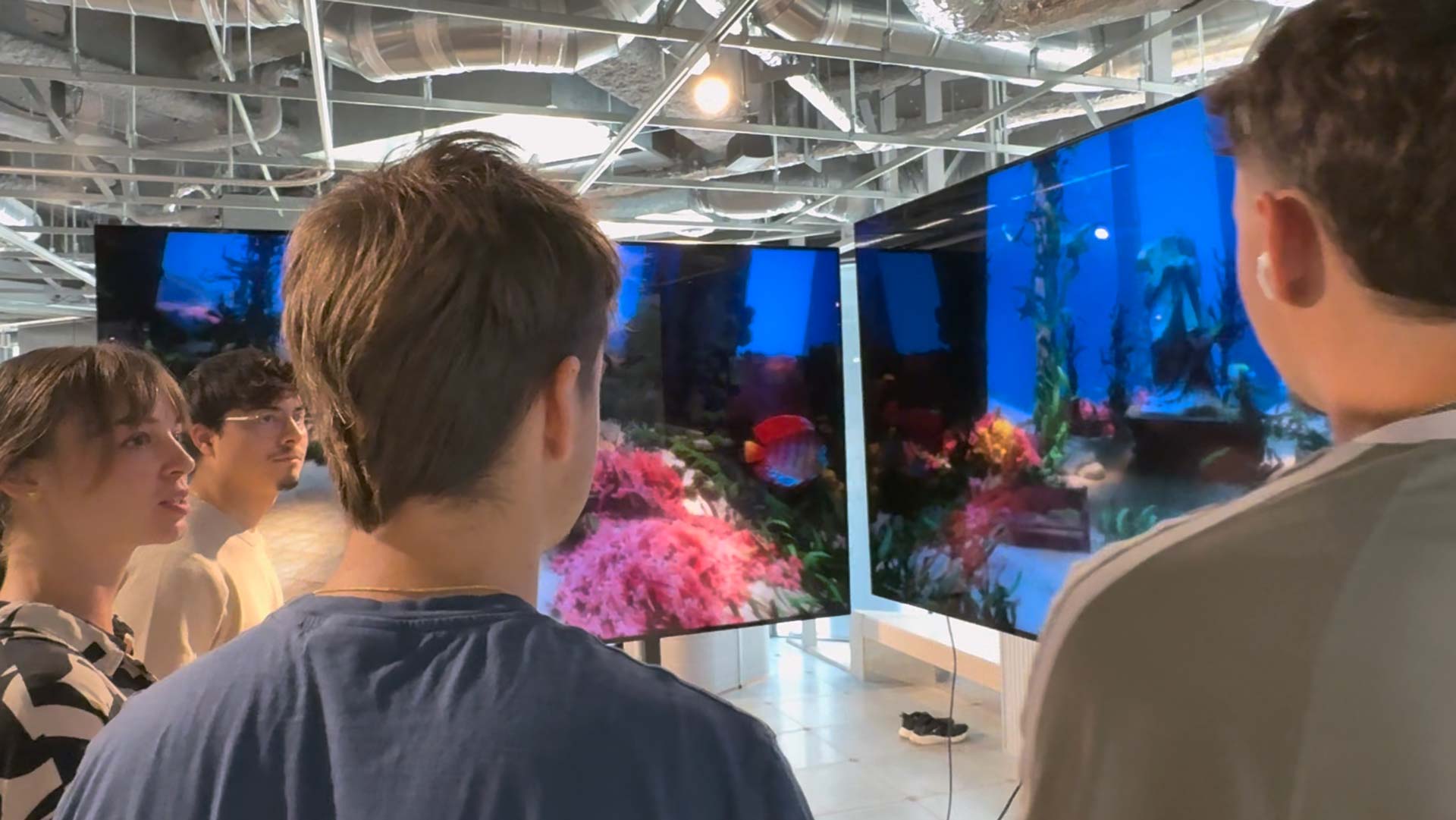
The collaboration gave students the opportunity to apply their education in a professional context they may not have previously considered.
They gained experience working with a real platform, production constraints, an international team, and an emerging form of immersive design.
It also demonstrated that expanding student career possibilities does not necessarily require creating an entirely new curriculum.
The foundations were already being taught.
MRSV*SPACE simply introduced another place to apply them.
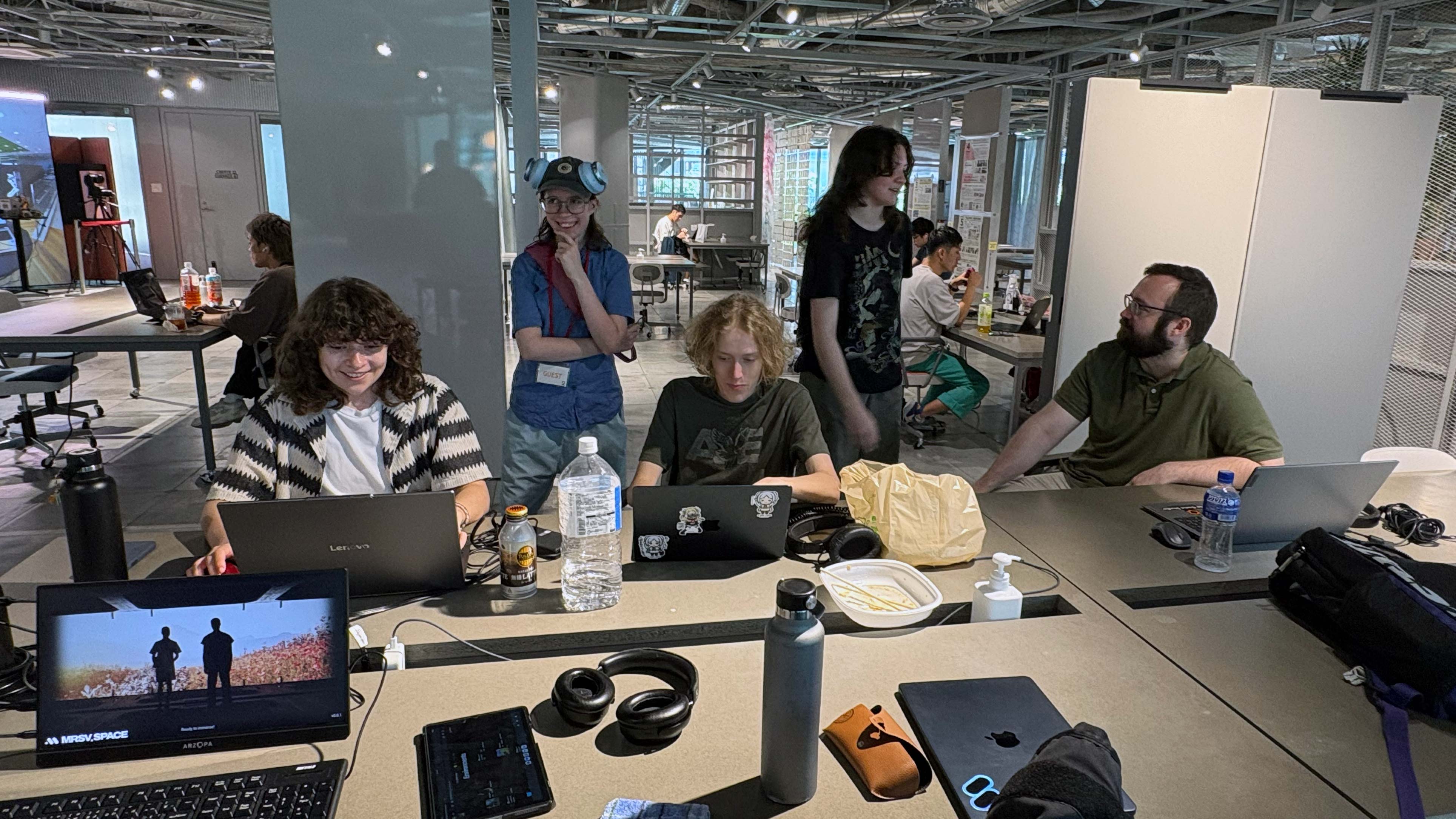
The same opportunity exists for universities with programs in:
Game Art • Game Design • Game Development • Animation • 3D Design • Technical Art • Interactive Media • Sound • Experience Design
For students, this means greater career optionality.
For schools, it means stronger differentiation and broader graduate outcomes.
And for the emerging spatial experience industry, it creates access to a generation of creators who already know how to build digital worlds.
Existing courses can become starting points for:
One education.
More destinations.
Where
MRSV*SPACE
Fits.
We are building MRSV*SPACE to help connect those creators with the physical spaces their work can inhabit.
Our developing ecosystem includes:
MRSV*SPACE Unreal Engine Plugins
Helping creators prepare spatial experiences within a familiar Unreal Engine workflow, lowering the entry barrier.
Space Builder
Helping translate physical rooms and display surfaces into digital spatial configurations.
MRSV*SPACE Launcher
Managing content, deployment, environments, and experience controls.
For schools, this creates an opportunity to become more than internship partners:
Together, they connect
Creator
Content
Platform
Physical Space
The game industry has spent decades developing the people, tools, and production methods required to build compelling digital worlds.
Spatial experience design offers those creators another canvas.
Underwater Cathedral showed that the distance between the two may be much smaller than we thought.
Our goal isn't to replace game education.It's to give those students another place to build.
Explore internships, collaborative projects, research, curriculum integration, and campus MRSV*SPACE programs.

MRSV*SPACE is developed by Hello xLAB KK
© 2026, MRSV SPACE Inc. All rights reserved. MRSV*SPACE the MRSV*SPACE logo, MRSV*LEARNING, MRSV*TRAVEL, MRSV*FUN, MRSV*HEALING, MRSV*RETAIL, MRSV*HERE, Space Builder, and the Space Builder logo are trademarks or registered trademarks of MRSV SPACE Inc. in Canada and elsewhere. Other brands or product names are the trademarks of their respective owners.